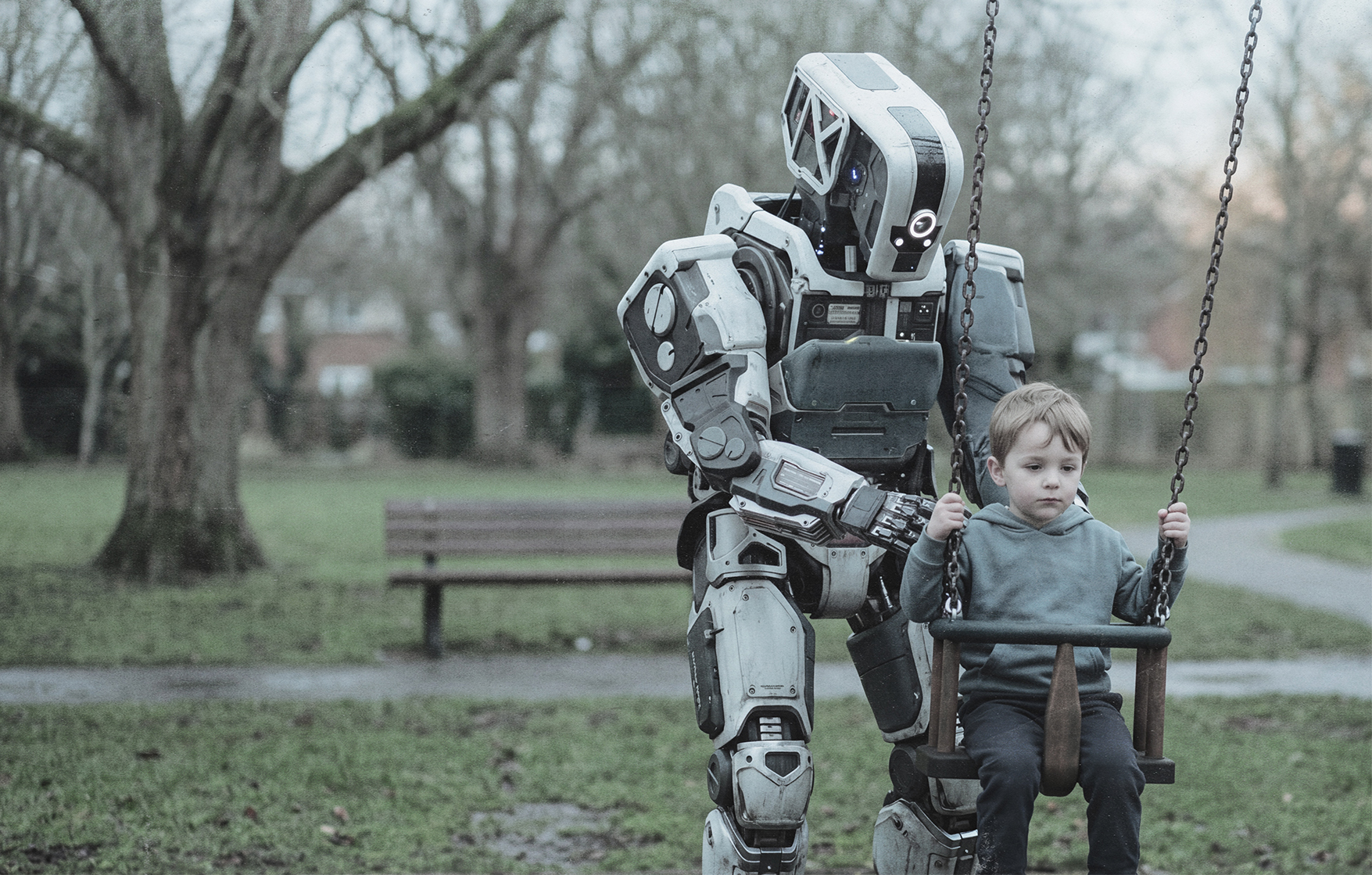
I love these questions from children. There's absolutely no consideration given to whether it's silly. No thought as to whether the question is trivial, absurd, or downright ridiculous. It comes from a place of one hundred percent pure curiosity. And anyone who's spent time with young children knows this is one of dozens, if not hundreds, of questions they ask in a single day.
Some are profound. Some, utterly ridiculous. But it isn't really about the question. It's about where it comes from.
Curiosity is the nucleus of creativity.
Which is why I have two growing fears about AI, which point in completely opposite directions.
I fear for the people who claim to be creative, but won't so much as look at AI with even basic curiosity. I don't mean love it, or even necessarily feel positively about it.
I get it if AI has cost you work - that sucks. But plenty who claim they wouldn't touch it with a ten mile pole haven't suffered that fate.
When I say 'embrace' I simply mean accept that it's here. Accept that it does things, and that those things mean YOU can do things you couldn't do before.
Technology is just things that don't totally work yet. For once they work, they are assimilated. They just become 'life', or 'the world'.
At one point, an alarm clock was technology. 'Knocker Uppers' in big cities probably didn't like alarm clocks. But, technology is indifferent, the boulder keeps on'a rollin'.
There's a thing about a new technology...
The advantages go to people who embrace it before it's perfect. Not those standing at a distance cataloguing the ways it isn't.
If you're not even considering what you could do with AI, things informed by your taste, your experience, and your craft, I fear for your curiosity.
My second fear is the opposite. People replacing their own curiosity with AI. Every thought, every problem, every reply - it's reached for immediately, reflexively.
Remember trying to remember the name of a song, a film, or an actor, before the internet was everywhere? Before we all carried the little black blocks in our pockets?
Part of the fun was trying to remember, to connect the dots. Now, someone just Googles it.
One might argue that in this case, Google is social salvation. We can sooner return to more interesting and intellectual conversation. But, I kind of miss this 'game', despite how trivial it was.
My fear is that this dynamic rolls out across everything we use our brains for. That we optimise all the 'games' out of life, and in doing so, we forget how to play them.
One failure mode is not being curious enough to embrace the thing. The other is being so dependent on it you lose the curiosity that made you good.
My son didn't know whether penguins like rain.
But the fact that he asked is everything.